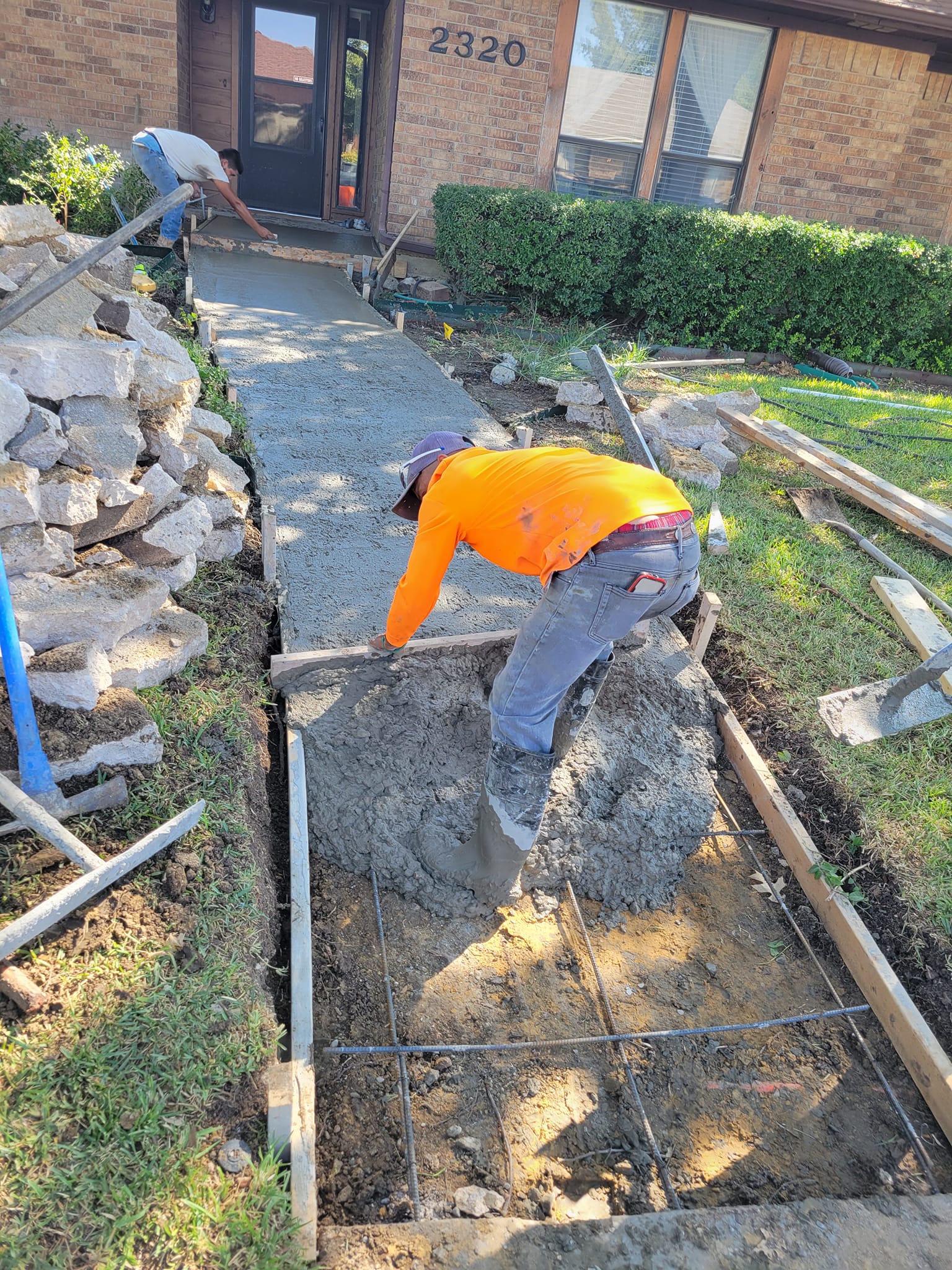
If you live in Dallas–Fort Worth, you have probably noticed that a lot of driveways, sidewalks and patios around town are cracked. Some cracking is normal for concrete anywhere, but North Texas has a few conditions that make it much more common here. The good news is that most of the serious cracking we see can be prevented when the concrete is built the right way from the start.
The real culprit: expansive clay soil
Much of the DFW area sits on the Blackland Prairie, a region known for heavy, expansive clay. This type of soil acts a lot like a sponge. When it rains, the clay soaks up water and swells. During long, hot summers, it dries out, shrinks and can even pull away from foundations and slabs, leaving gaps underneath.
That constant cycle of swelling and shrinking pushes and pulls on anything sitting on top of it. A concrete slab is strong when it is pressed down evenly, but it is much weaker when the ground underneath lifts one part and drops another. That uneven movement is what creates the long, wide cracks and sunken sections you see on so many older driveways.
Water makes everything worse
Water is the trigger for most soil movement. When a driveway or patio is not graded to drain, rain pools on the surface or runs toward the house. Water that sits at the edge of a slab soaks into the soil below it, softening the ground and causing the clay to swell in that one spot.
Once a slab starts to settle, the problem tends to feed itself. The low spot collects more water, the ground under it gets softer, and the slab sinks further. That is why a driveway that has one small dip often ends up with a big crack running right through it a few years later.
Gutters and downspouts play a role too. A downspout that empties right next to a walkway or patio can dump hundreds of gallons of water into the soil under it during a single storm.
A weak base and no reinforcement
The other big reason concrete fails is what was done, or not done, before the pour. Concrete poured on soft, loose dirt does not have even support. Concrete poured without steel reinforcement has nothing holding it together once a crack starts. Both shortcuts save time and money on the day of the pour and cost homeowners a lot more later.
How a properly built slab resists cracking
You cannot change the soil in North Texas, but you can build concrete that handles it much better. Here is what goes into every slab we pour:
- Grading for drainage. We shape the ground so water flows away from your house, garage and the edges of the slab instead of pooling against them.
- A compacted base. We remove soft soil and build and compact a solid base, so the concrete is evenly supported across its whole area.
- Rebar reinforcement. A grid of steel rebar runs through the slab. If the ground moves and a crack forms, the steel holds the pieces together so the crack stays tight instead of spreading and separating.
- Control joints. Concrete shrinks a little as it cures. Control joints are planned grooves that give the slab a place to crack neatly, hidden inside the joint, instead of randomly across the surface.
Hairline cracks vs. problem cracks
Not every crack is a reason to worry. Thin hairline cracks, especially ones that run along a control joint and are not getting wider, are a normal part of how concrete behaves. They are usually cosmetic.
The cracks that signal a real problem are different:
- Cracks wider than a pencil, or ones that keep getting wider
- One side of the crack sitting higher than the other
- Sections that have sunk, tilted or started holding water
- Crumbling edges or a flaking, broken-up surface
- Cracks that come back right after they are patched
Those signs usually mean the base under the concrete has failed. Patching the surface will not fix that, because the problem is underneath.
What you can do to protect your concrete
Even the best-built slab benefits from a little care:
- Make sure gutters and downspouts carry water away from driveways, walkways and patios.
- Keep the soil along the edges of your concrete from washing out, which can leave the edges unsupported.
- Do not let heavy equipment, trailers or dumpsters sit on a residential driveway for long periods.
- Clean up oil and chemical spills quickly, and consider sealing the surface.
- Keep an eye on large trees close to the concrete. Roots can lift and crack slabs over time.
Common myths about cracked concrete
“Thicker concrete never cracks.” Thickness helps a slab carry weight, but it does not stop the ground from moving. A thick slab on a poor base can still crack and sink. Base preparation, drainage and reinforcement matter just as much as thickness.
“A sealer will fix the cracks.” Sealers protect the surface from water and stains, and they can help keep small cracks from getting worse. They cannot fix a slab that has settled or broken because the ground under it failed.
“New concrete should never have a single crack.” Concrete shrinks slightly as it cures, so a few thin cracks, especially inside control joints, are normal. What you do not want is wide, spreading cracks or sections that sink or lift.
“Patching is always cheaper.” Patching can make sense for small, stable cracks. But when the base has failed, patches tend to break loose and the cracks come back. Paying for repeated patches can end up costing more than doing the job right once.
Questions to ask before you hire a contractor
- How will you prepare and compact the base?
- Will the slab be reinforced, and with what?
- How will you grade it so water drains away from the house?
- Where will the control joints go?
- Is tear-out and haul-off of the old concrete included?
- When can I walk and drive on it?
A good contractor should be able to answer every one of these clearly. If the answers are vague, that is a warning sign.
When replacement is the right call
If your driveway, patio or walkway has wide cracks, sunken sections or a crumbling surface, replacement is usually the long-term fix. Replacing it is also the chance to correct what caused it to fail: we tear out the old concrete, regrade for drainage, build a compacted base and pour a new, rebar-reinforced slab.
Not sure what your concrete needs? Call DFW Solid Concrete at (972) 922-8156 or request a free on-site estimate. We will take a look and tell you honestly whether it needs to be replaced.