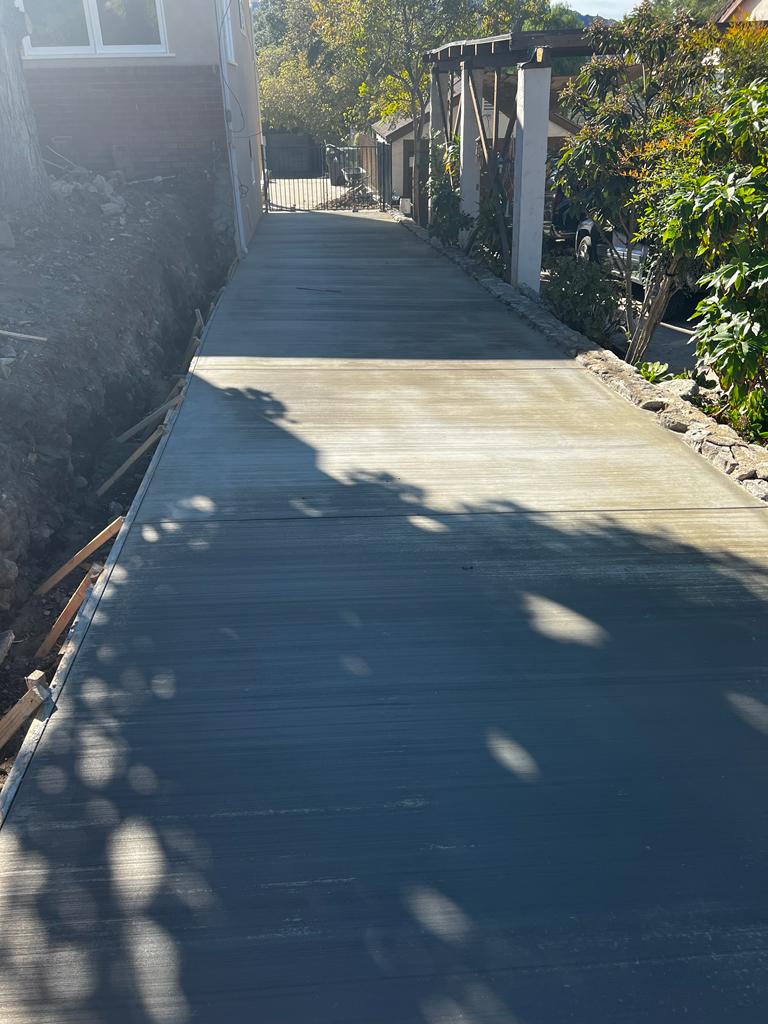
A concrete driveway is one of the longest-lasting parts of your home, but “how long” depends a lot on how it was built and what it has been through. A driveway poured on a solid base with steel reinforcement can last for decades. One that was rushed can start cracking and sinking in just a few years, especially in North Texas.
What decides how long a driveway lasts
There is no single number that fits every driveway. These are the factors that make the biggest difference.
1. The base underneath
This is the most important factor, and the one you cannot see. Concrete needs even support. If it is poured on soft, loose or poorly compacted dirt, parts of the slab will settle more than others, and that uneven support leads to cracks. A graded, compacted base gives the driveway a stable foundation.
2. Soil and water
The expansive clay under most of DFW swells when it gets wet and shrinks in dry weather. When water is allowed to pool on or around a driveway, it softens the soil and makes that movement worse. Driveways that are graded so water runs off, and that are not flooded by downspouts, last much longer.
3. Reinforcement and thickness
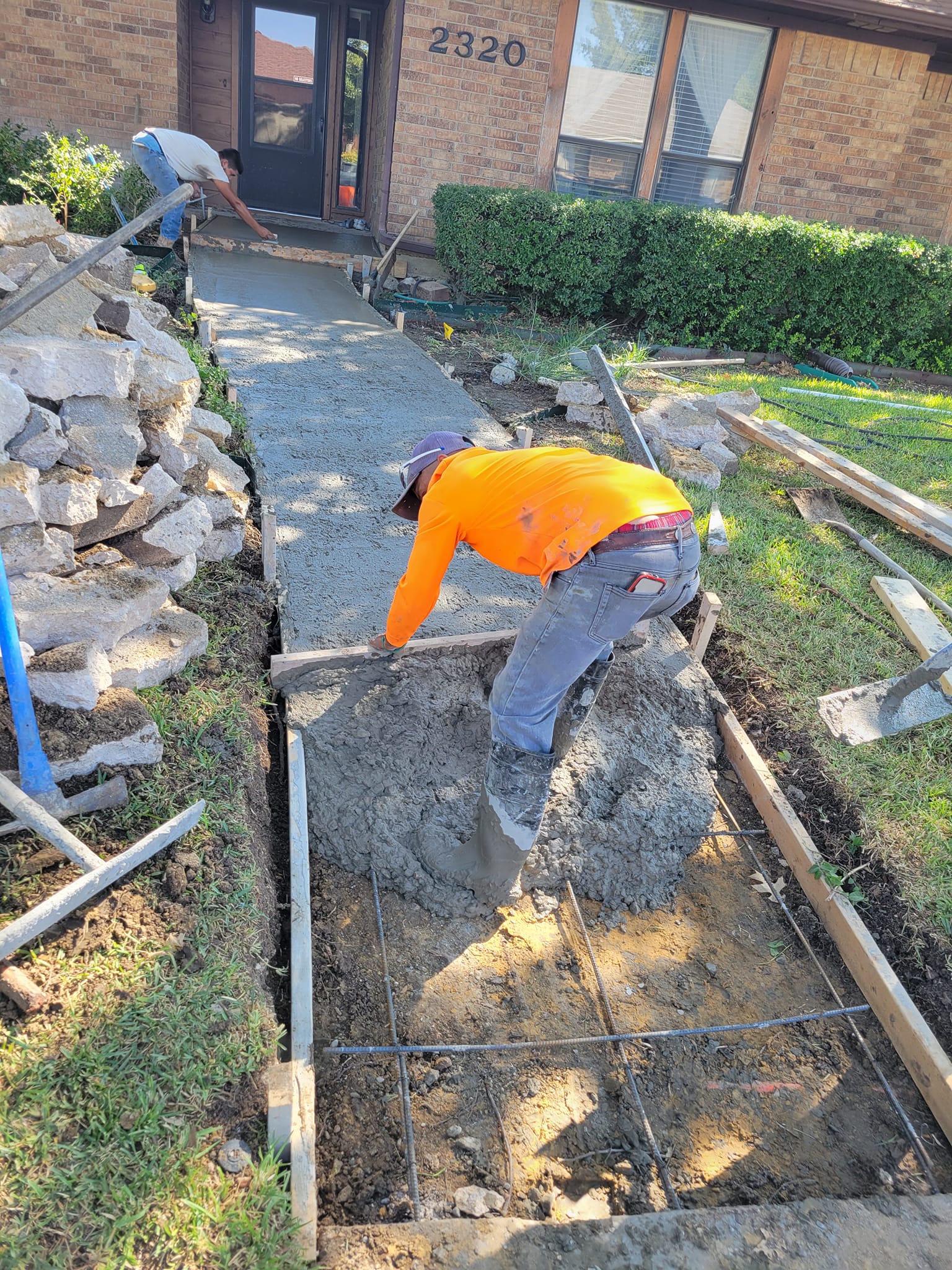
Steel rebar running through the slab holds the concrete together when the ground moves, so small cracks stay small. Thickness matters too. We pour residential driveways 4 inches thick and reinforce them with rebar, which gives everyday vehicles a strong, durable surface.
4. Control joints
Every concrete slab shrinks a little as it cures. Properly placed control joints give it a planned place to crack, so the cracks stay neat and hidden inside the joints instead of wandering across the surface.
5. How it is used
A residential driveway is built for cars, SUVs and pickup trucks. Repeatedly parking heavy equipment, RVs, dumpsters or loaded trailers on it can crack it, especially near the edges, where it has the least support.
6. Care over the years
Regular cleaning, quick cleanup of oil and chemical spills, keeping water draining away and sealing the surface all help a driveway stay in good shape for longer.
Signs your driveway is near the end
Some wear is normal. These signs usually mean it is time to think about replacement:
- Wide or spreading cracks that keep getting worse or come back after patching
- Sunken or uneven slabs with one side higher than the other
- Water pooling on the driveway or flowing toward the garage
- Crumbling edges or a flaking surface
- Tree roots lifting sections of the slab
When several of these show up together, the base under the driveway has usually failed. Surface patches will not hold for long because the problem is underneath.
Repair or replace?
Small, stable hairline cracks often do not need anything at all, or can simply be sealed. But when a driveway has settled, broken into separate pieces or started to crumble, replacement is the long-term fix.
Replacing a driveway is also the chance to fix what went wrong the first time. When we replace a driveway, we tear out and haul off the old concrete, grade for drainage, build a compacted base and pour a new rebar-reinforced slab with clean control joints. Most driveways take 1–3 days, depending on the project and the weather.
How to make your new driveway last
- Stay off it while it cures. You can usually walk on it after a day or two and drive a car on it after about a week.
- Keep gutters and downspouts pointed away from it.
- Clean up oil, gas and chemical spills promptly.
- Avoid parking very heavy equipment on it, especially near the edges.
- Consider sealing it to protect the surface.
What happens during a driveway replacement
If you have never replaced a driveway before, here is what to expect:
- Free estimate. We measure the driveway, look at drainage and talk about finishes, then give you a written price.
- Tear-out. The old concrete is broken up and hauled away.
- Grading and base. We shape the ground so water runs away from the garage and house, then build and compact a solid base.
- Forms and rebar. Forms set the shape and height of the new driveway, and rebar is laid in a grid across the area.
- Pour and finish. The concrete is poured 4 inches thick, finished, and cut with control joints.
- Cure and walk-through. We clean up, walk through the finished driveway with you, and tell you when it is ready to use.
Plan ahead for your driveway project
- Plan where you will park while the driveway cures. You will usually need to keep vehicles off it for about a week.
- Move any items stored along the edges of the driveway before work starts.
- Think about whether you want to widen the driveway or add a parking pad while it is being replaced.
- Let us know about sprinkler heads, lighting or other lines near the edges of the driveway.
A little planning makes the whole project go more smoothly for you and your family.
Thinking about a new driveway?
If your driveway is cracked, sinking or holding water, we will come out, take a look and give you a written estimate for free. Call DFW Solid Concrete at (972) 922-8156 or send us the form.